A live six-week course by Yahia Salem, MD
Python Coding with AIin Healthcare
Learn to write Python, analyze your own data, and check what AI writes for you, live and from zero. For medical students, doctors, nurses, pharmacists, and researchers.
- Duration
- 6 weeks
- A week, online
- 2 live sessions
- Language
- Arabic + English
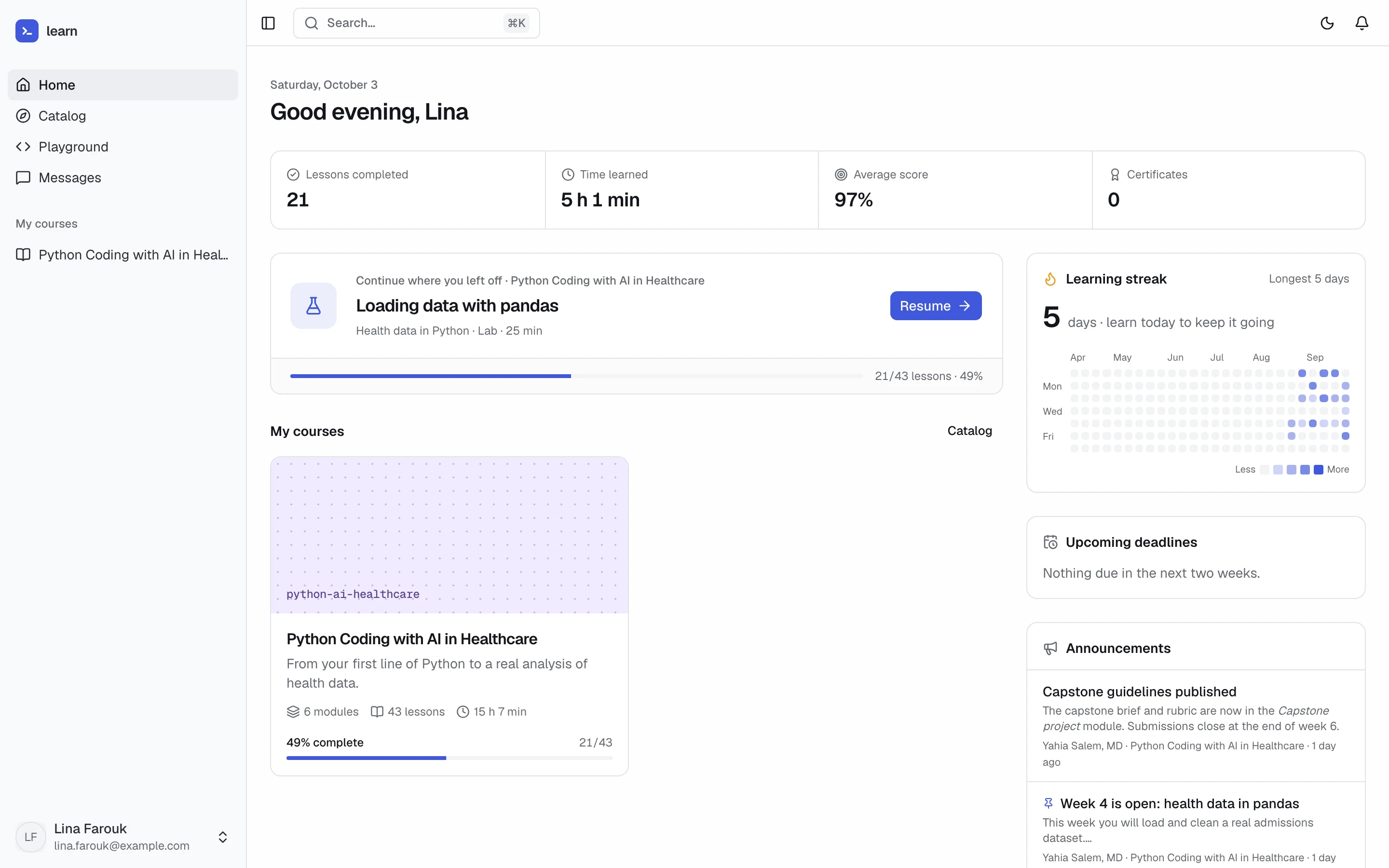
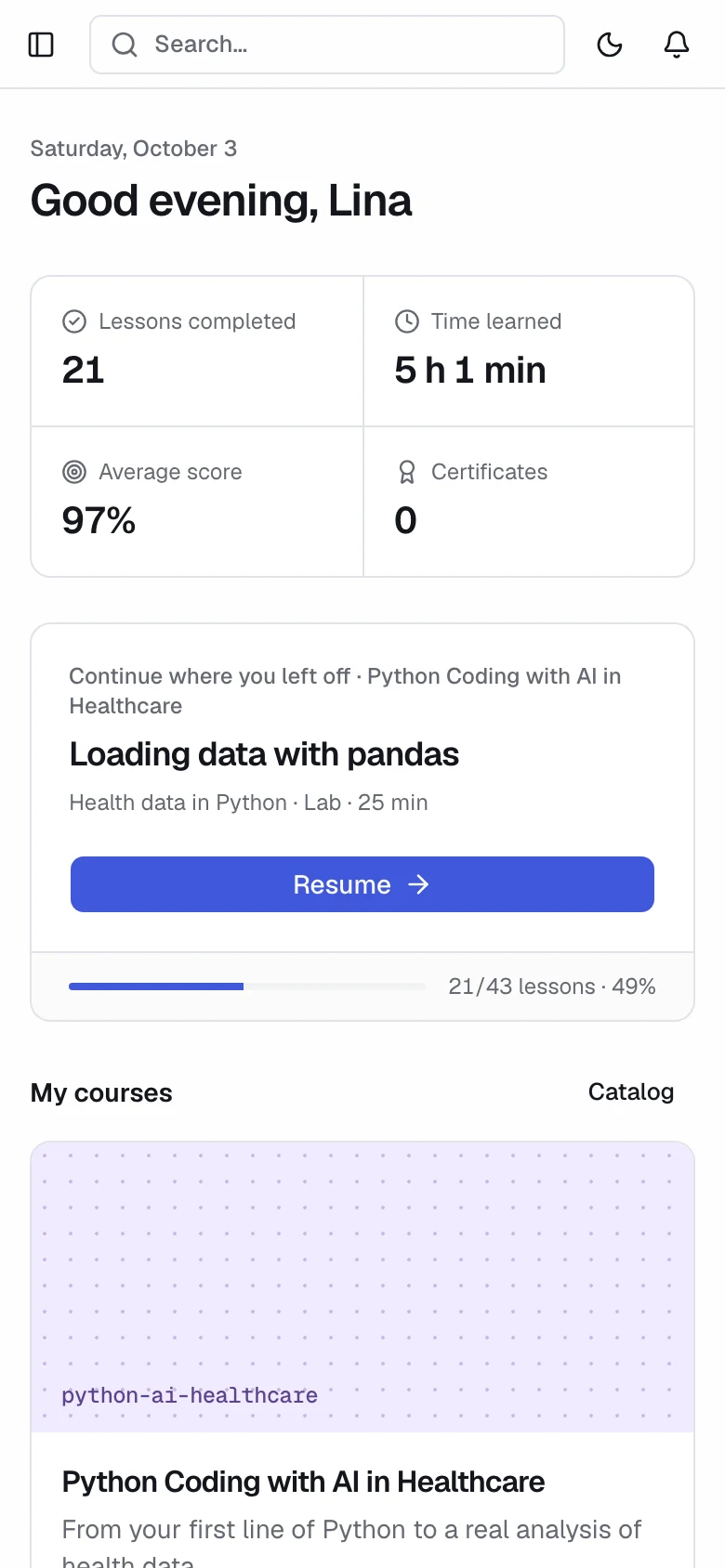
Screens from the course platform, shown with sample learner data.
AI reached medicine before the training did
In a study published in 2023, only 25.5% of health-professions students surveyed in Jordan said they had been taught about AI in their undergraduate studies. In a 2025 survey across 109 countries, 48% of clinicians said they had used an AI tool for work, but only 30% said they had received sufficient training.
Medicine is moving to close that gap. In November 2025 the American Medical Association adopted policy to expand AI training, from medical school to continuing education for practicing physicians.
Analyze your own data, without waiting
Load, clean, describe, and plot a dataset, then run the common tests a paper or thesis needs. A statistician becomes someone you consult, not someone you wait for.
Use AI, and check what it writes
AI drafts code in seconds, and it is often almost right. In a p-value or a patient record, almost right is wrong. You learn to read what it writes, test it, and know when not to trust it. That is what week three is about.
The frustration developers cite most with AI tools, named by 66%, is solutions that are “almost right, but not quite.”
Turn a routine calculation into a script
A clinical score, a summary by ward, a table you rebuild every month. The course exercises are tasks like these (a qSOFA score, length of stay by ward), and the same approach carries over to your own work.
Leave with work you can show
A capstone analysis on a health dataset, your own if you have one, built with 1:1 guidance and presented at the end. Something concrete for a research meeting, a supervisor, or an application.
- Medical students
- Whatever your year, rotations included: use what you learn now on a research project or thesis, and finish able to analyze a dataset yourself and use AI with judgment.
- Doctors
- For interns, residents, and practicing physicians: two live sessions a week, at times planned around the availability you give when you apply. Find answers in your own data, and judge what AI gives you instead of taking it on trust.
See it in action
Write and check code, plot a dataset, and ask the assistant about your code, on the kind of data a ward or a study produces.
Exercises
Press Run to see the output, then Check to test your code against the examples.
An exercise in the editor: the code groups hospital admissions by ward and takes the median length of stay. Run prints the median for three wards, and Check shows 3 of 3 checks passed.
Labs
Plot a dataset in a lab cell, and the chart appears right under the code.
A lab cell runs df["age"].plot.hist(bins=12), and a histogram of patient ages appears under it.
AI assistant
Ask the assistant in the Playground about your code. It suggests, and you decide what goes in.
Asked how to handle missing values, the assistant answers that df.dropna() removes rows with missing values, and suggests checking how many you would lose first with df.isna().sum(), offered to copy or insert as a new cell.
Between the live sessions, the work happens here
Every exercise, lab, and lesson runs in the browser. There is nothing to install.
Course
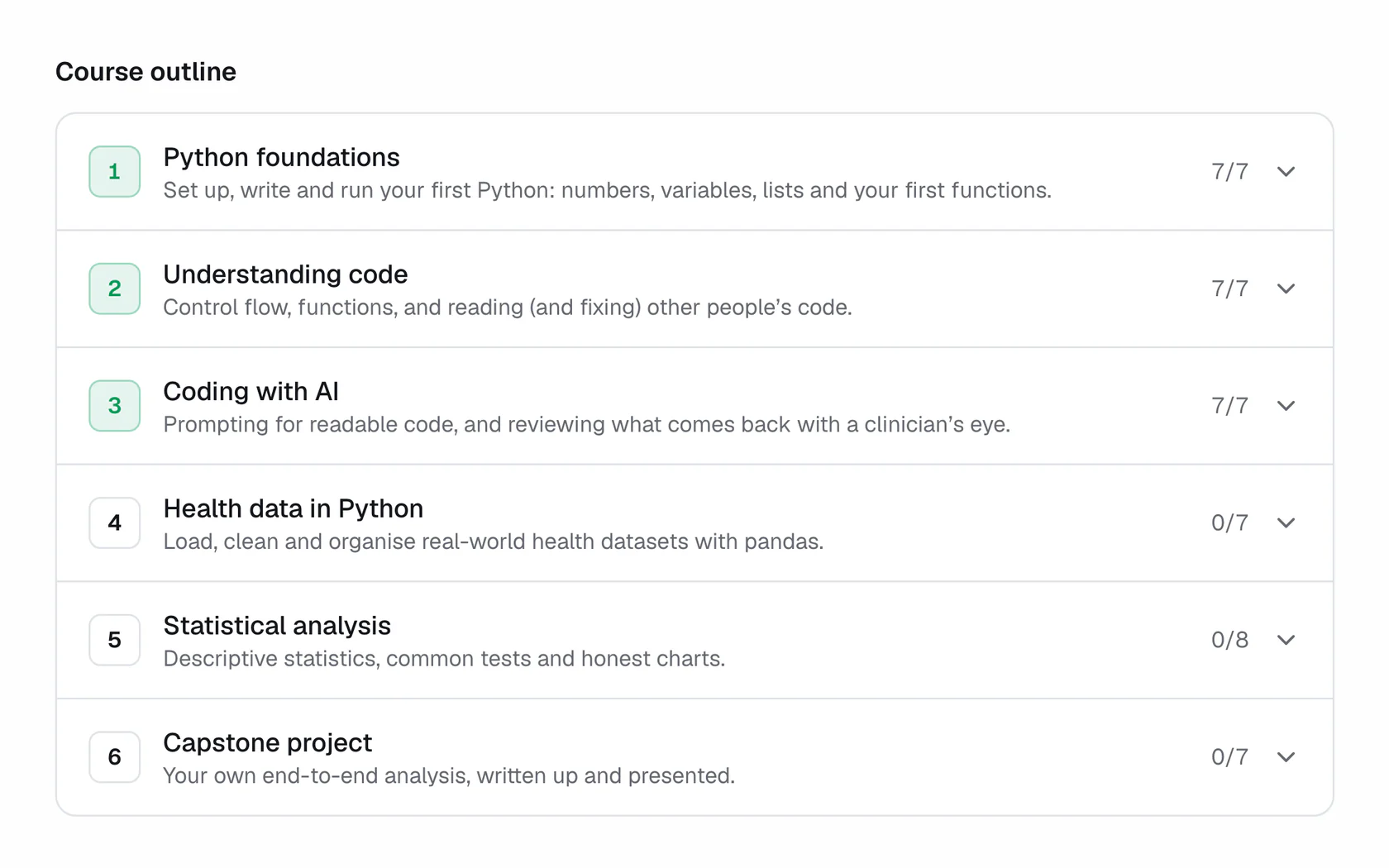
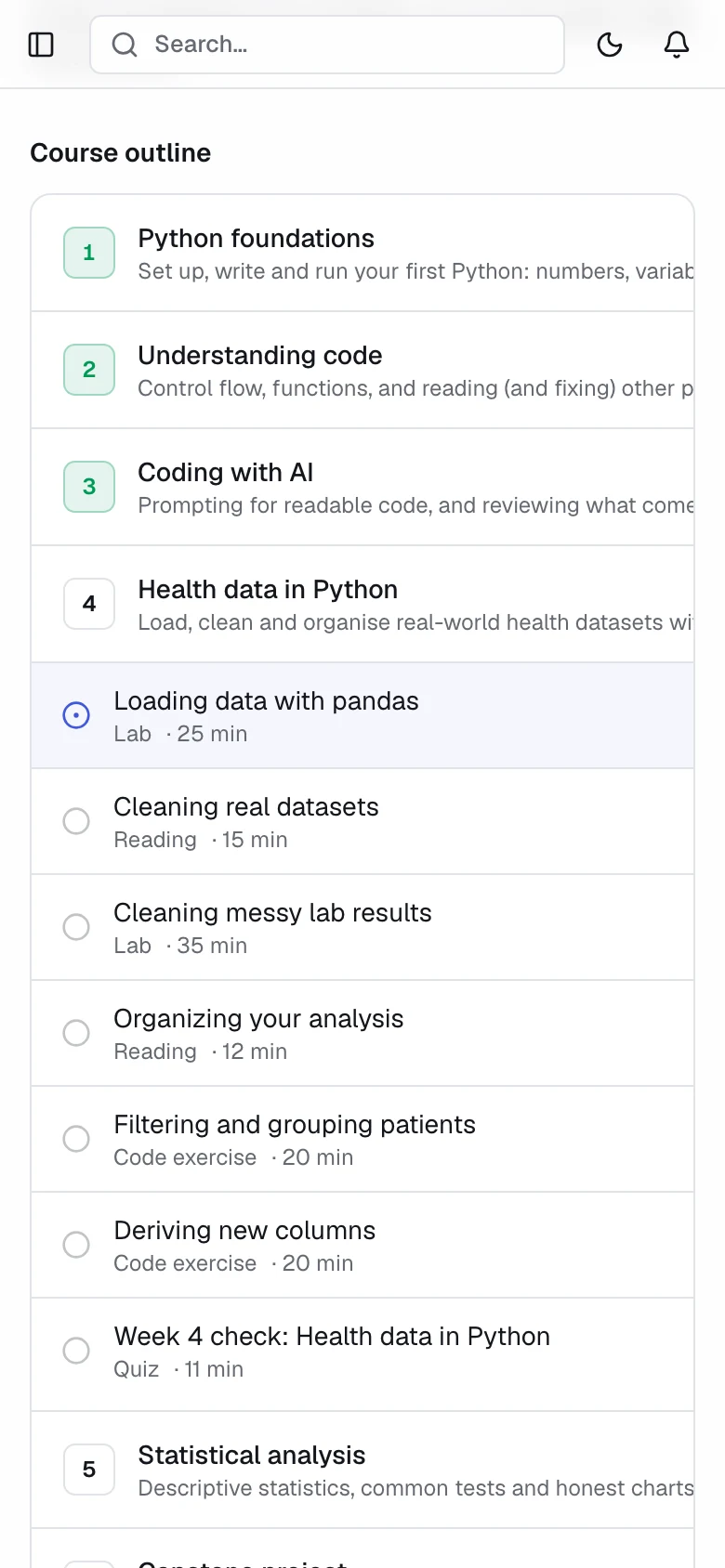
Every week, laid out in order
Lessons, exercises, and readings for each week sit in one place, and your progress is saved as you go.
Exercises
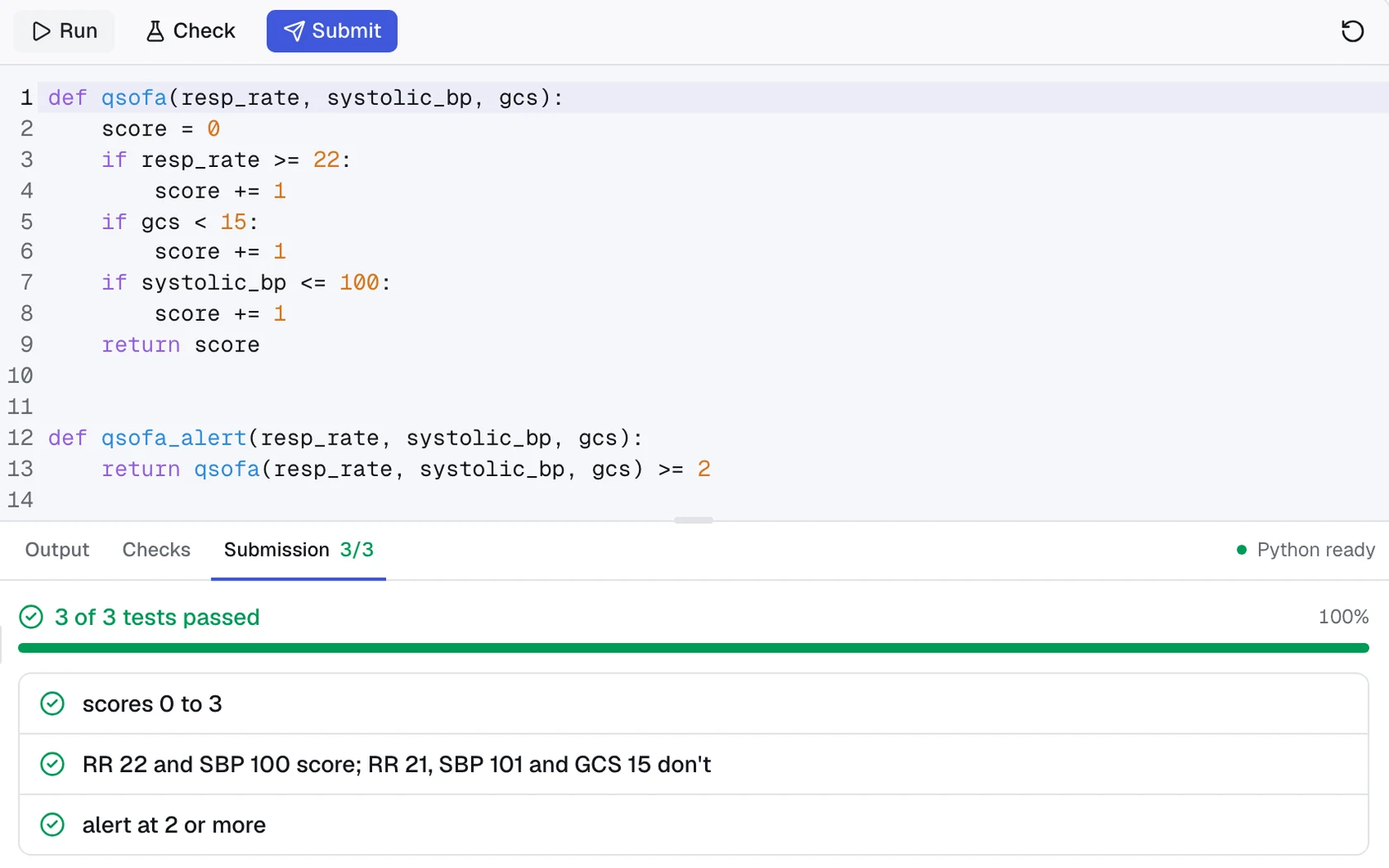
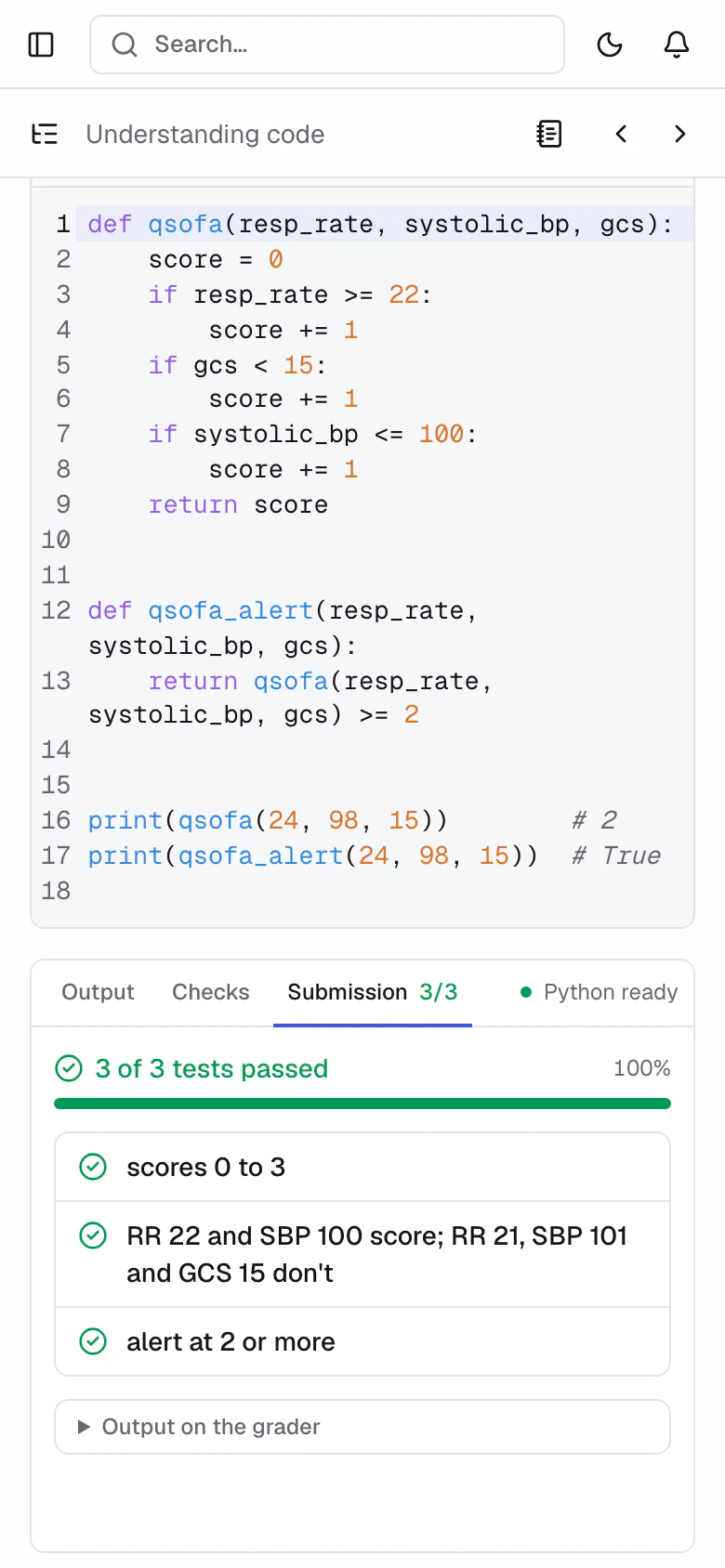
Write Python in the browser, and get feedback right away
Each exercise, like computing a qSOFA score, runs your code against checks and shows what passed and what to fix, before you move on.
Labs
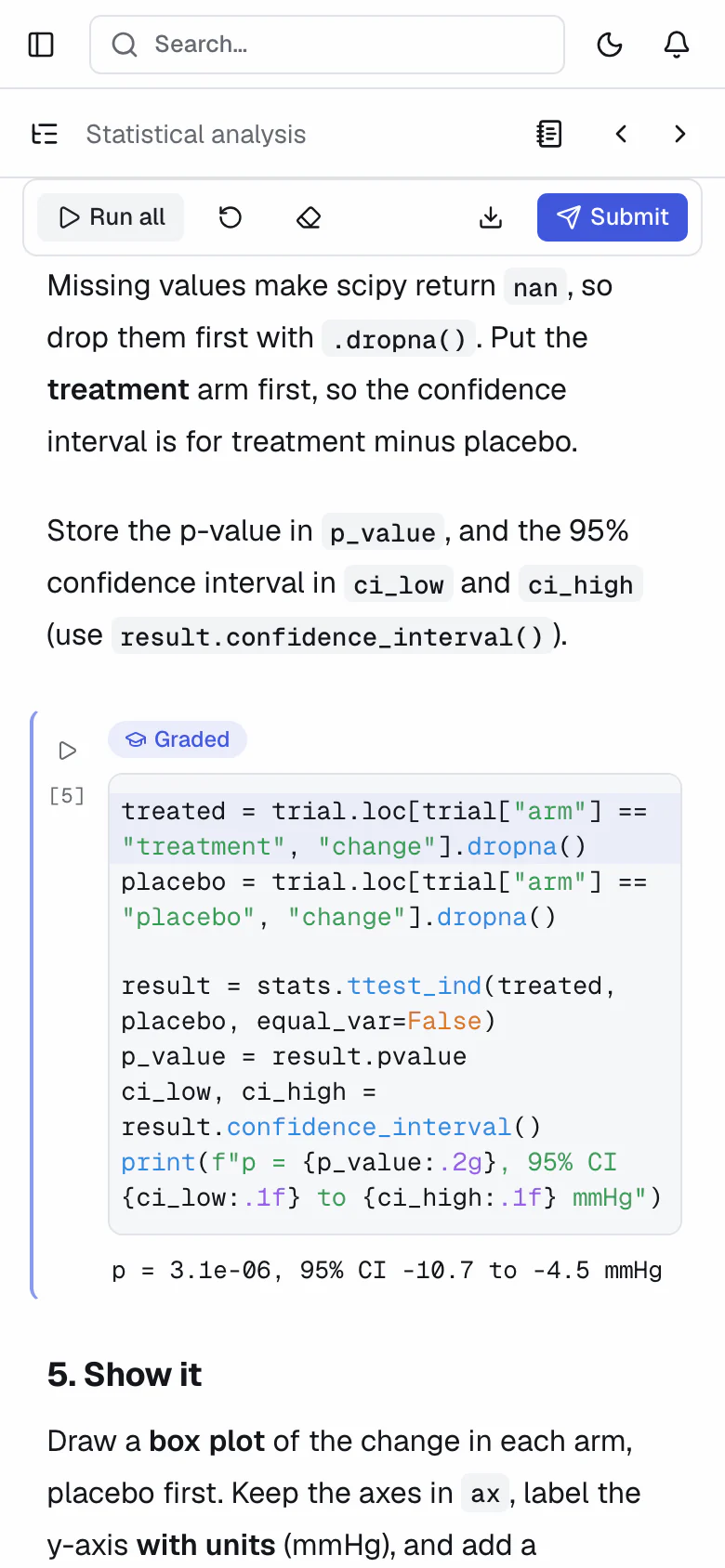
Realistic health data, cell by cell
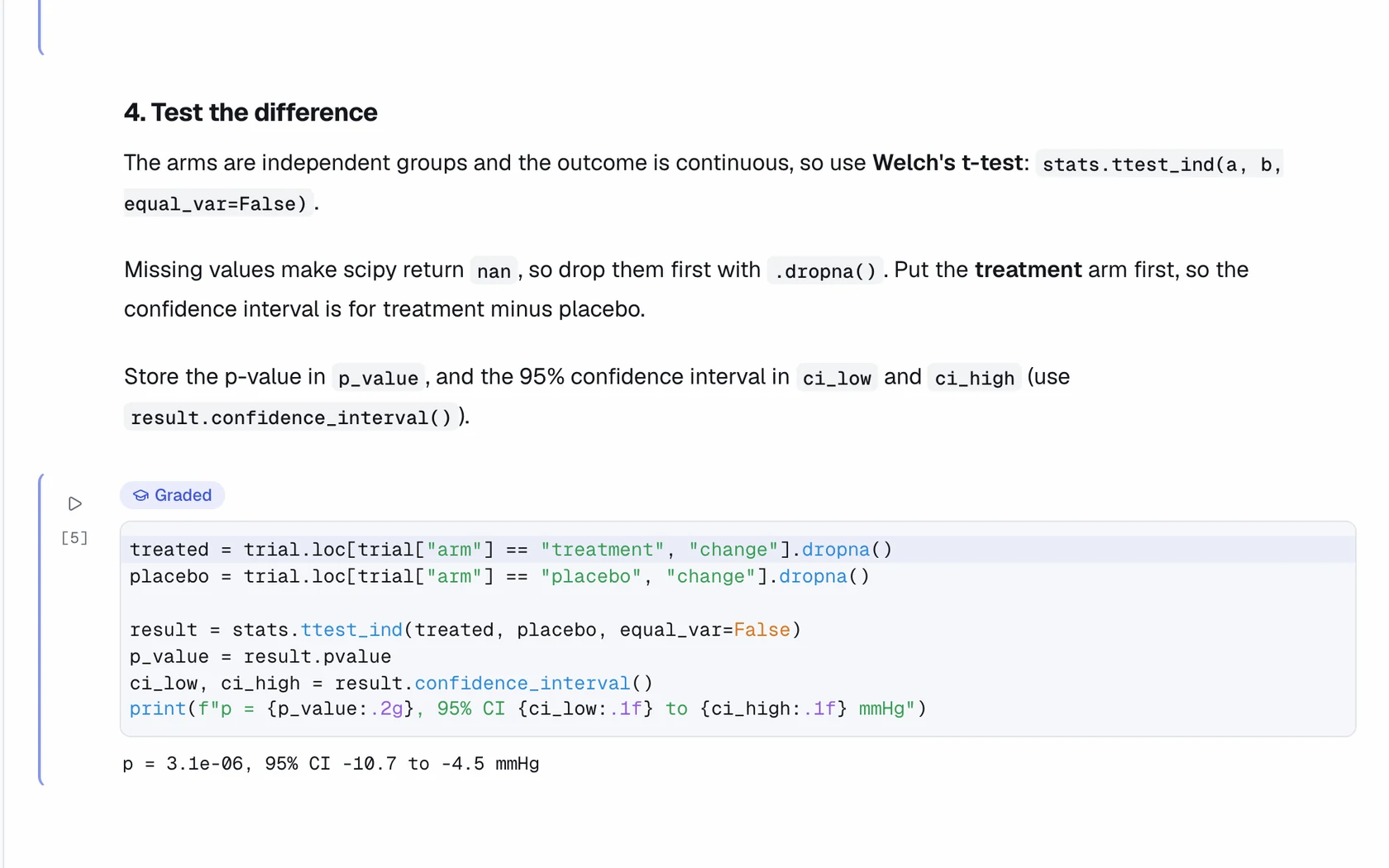
Load, clean, plot, and test health datasets, such as a blood-pressure trial, in interactive labs, the way the analysis is actually done.
Walkthroughs
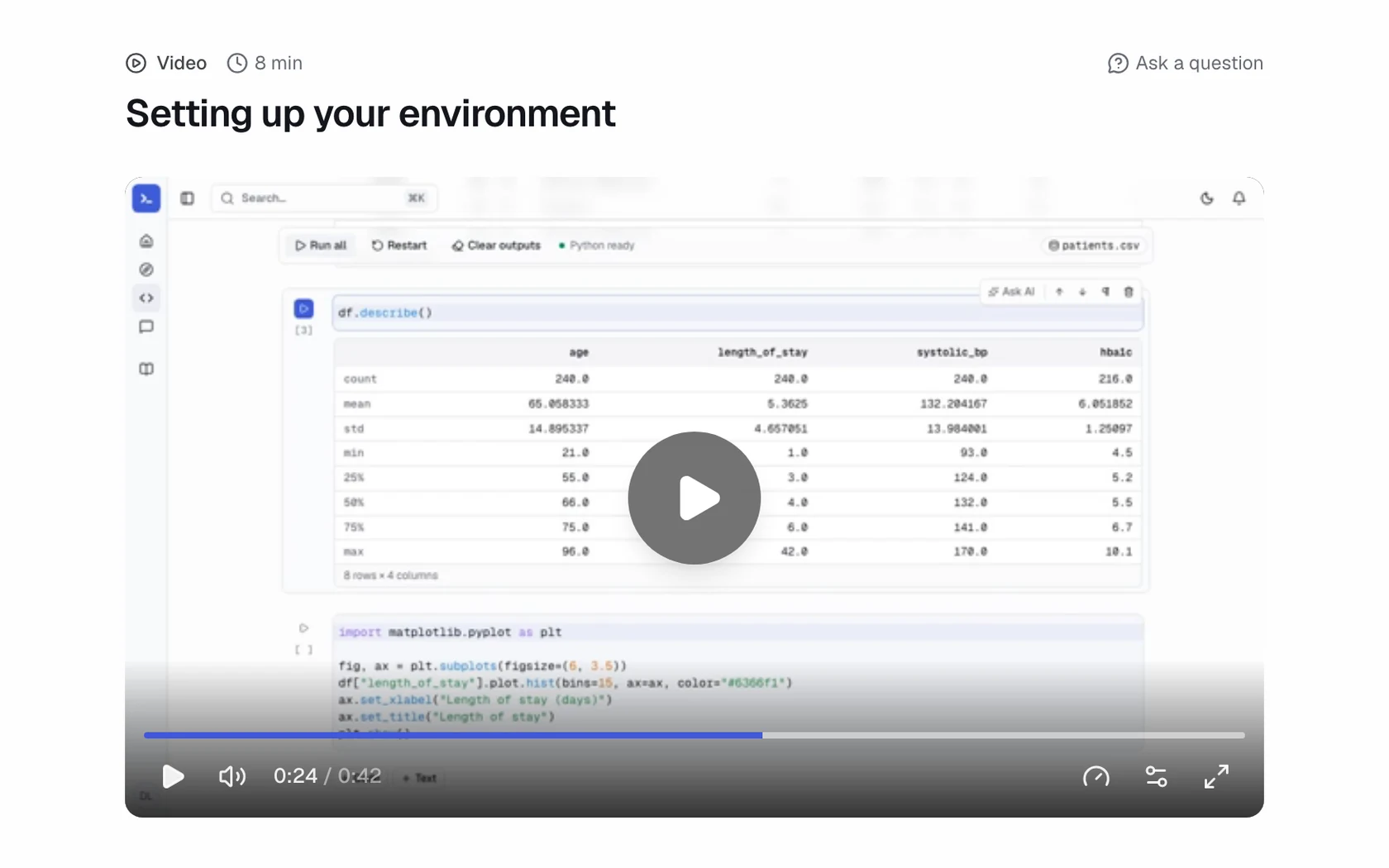
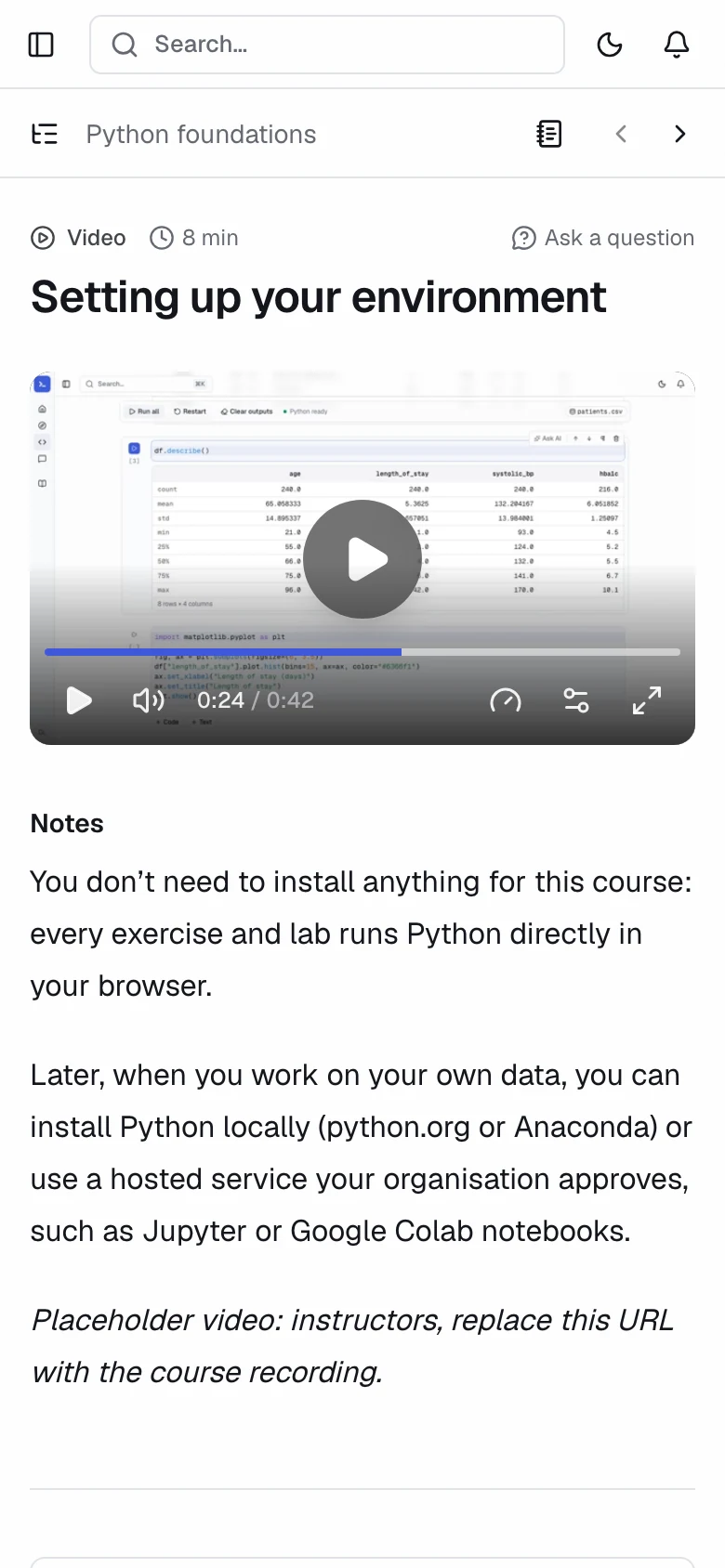
Recorded walkthroughs for the trickier parts
Plus a reading and a short quiz after every session, so nothing depends on memory.
Help
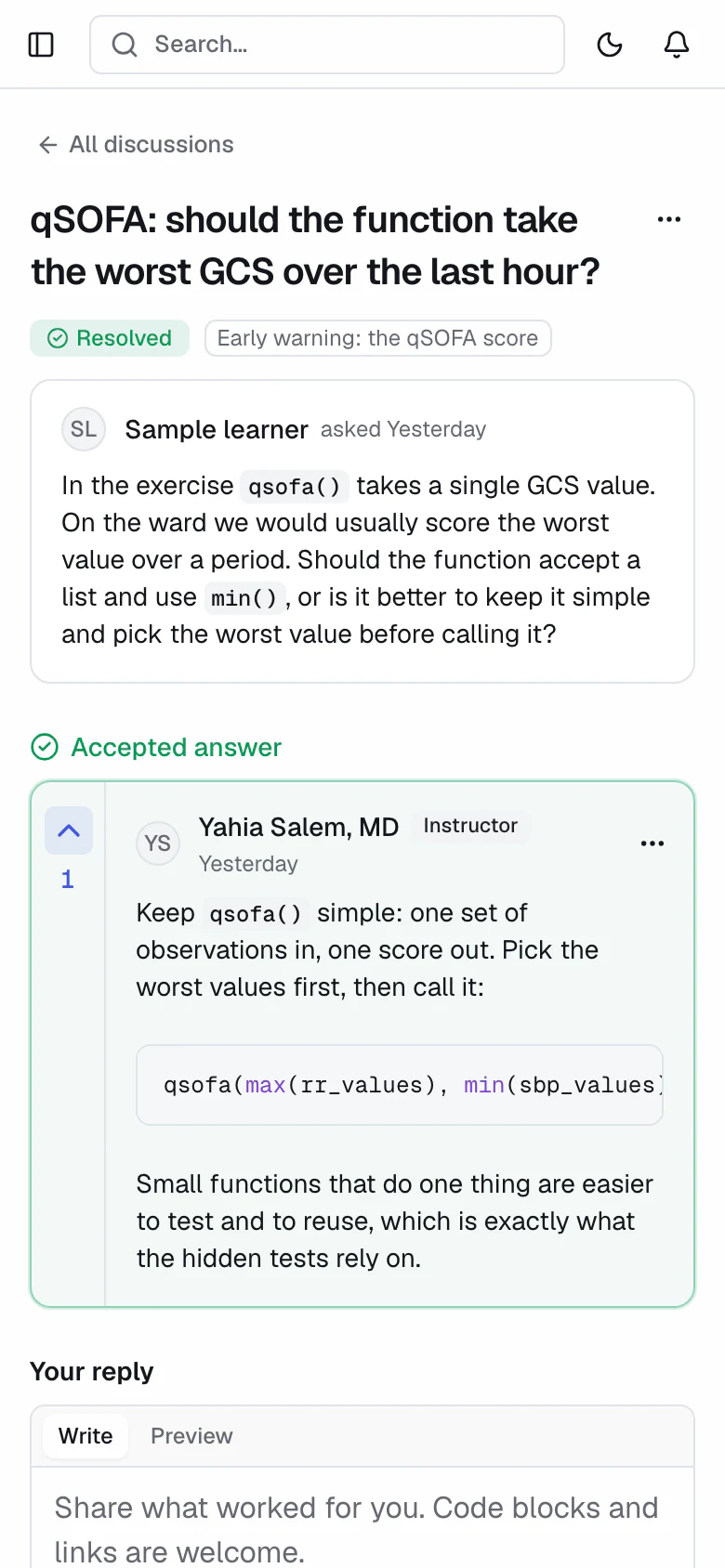
Help is one message away
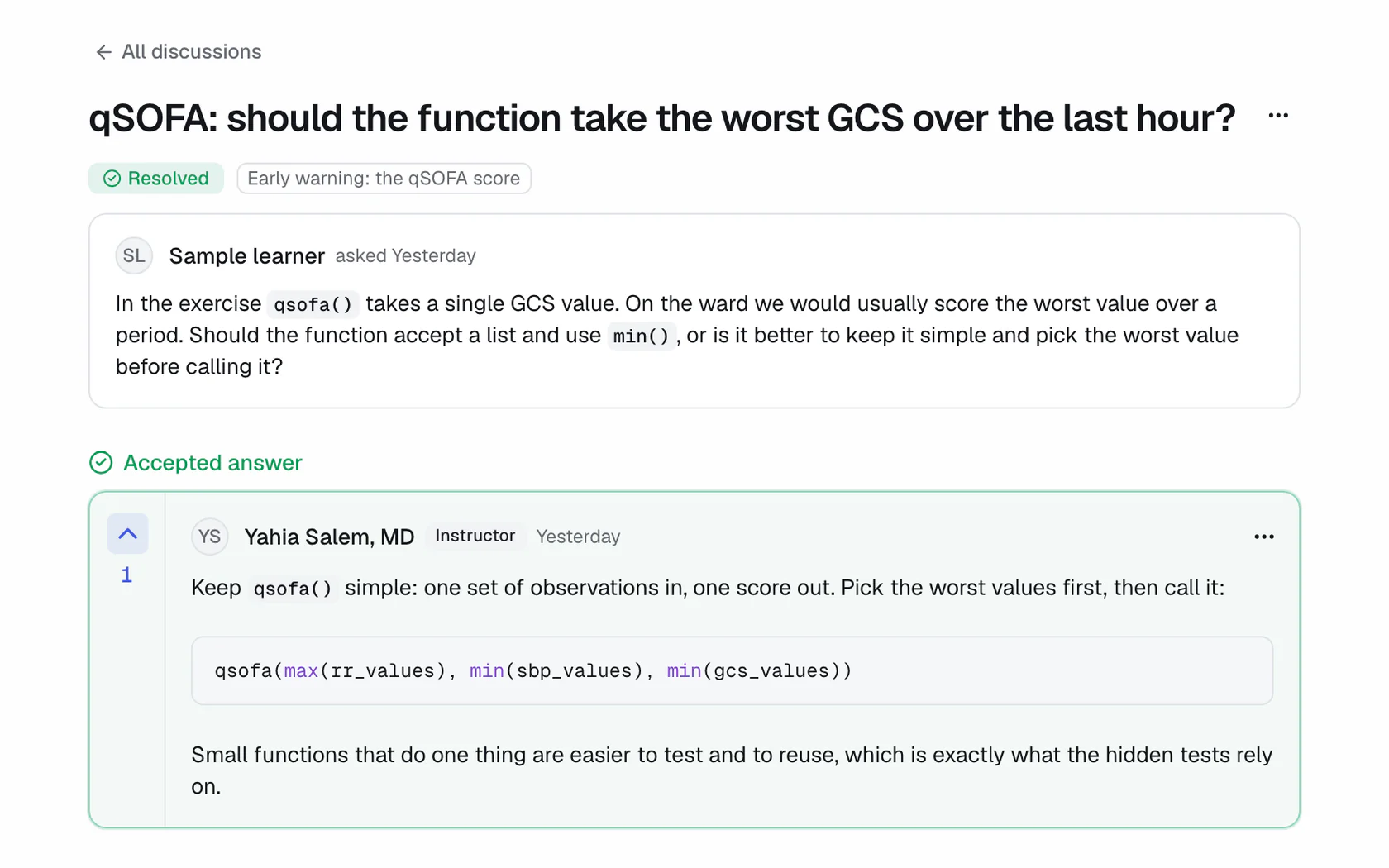
Ask in the course discussions or message me directly. 1:1 help whenever you get stuck.
A doctor who codes should not be rare

Yahia Salem, MD
Your instructor
I am a physician, and for years I have built the software healthcare runs on: a genomics platform, an AI receptionist for clinics. I analyze research data the same way, in code, not in a spreadsheet. And I code with AI every day as a fast pair. It drafts, I read, fix, and decide.
What I see around me has not changed. Colleagues with their own research data, waiting for someone else or fighting SPSS, sure that code is not for doctors. There was no clear place to start. This course is that place.
- Medicine
- MD, University of Jordan
- Engineering
- CTO at Subul AI · Senior Software Engineer at Pan.bio
- Experience
- 6+ years building healthcare software
- Research
- Co-author of 4 peer-reviewed papers
- Mobile apps
- 7 published apps · 160K+ downloads
What you’ll be able to do
- Write Python from zero: variables, loops, functions, and your first real scripts
- Read code you did not write, including code an AI wrote, and tell what it actually does
- Ask AI tools for clean, working code, then review it, test it, and know when not to trust it
- Clean, describe, plot, and test health data yourself: the analysis a paper or thesis needs
- Present a capstone analysis on a health dataset, your own if you have one, that you can build a study on
Who this is for
Medical students in any year, interns, residents, and practicing physicians, as well as nurses, pharmacists, and researchers. No coding background needed, just commitment.
The six weeks
Six weeks is the plan. If a week takes you longer, we stay on it until it clicks.
- Week 1
Python foundations
Setting up, syntax, variables, data types, and writing your first scripts.
- Week 2
Understanding code
Control flow, functions, and how to read code line by line, find bugs, and fix them.
- Week 3
Coding with AI
Prompting AI tools to generate readable code, reviewing what they produce, and knowing when not to trust them.
- Week 4
Health data in Python
Loading, cleaning, and organizing realistic health datasets with pandas.
- Week 5
Statistical analysis
Descriptive statistics, the common inferential tests, and clear charts, framed the way a research question needs them.
- Week 6
Capstone project
An end to end analysis of a healthcare dataset, built with 1:1 guidance and presented at the end. Bring your own research data if you have it.
Price and format
Seats are limited on purpose
Small cohort, so everyone gets real 1:1 time instead of a lecture to a hundred people.
- Next cohort
- Starts once seats are filled. Session times are planned around the cohort’s availability.
- Sessions
- Two live sessions a week, online, about ninety minutes each
- Language
- Arabic, with the technical terms and all materials in English
- Weekly time
- The two sessions, plus two to three hours of exercises and reading
Apply for a seat
Your name, email, and three quick questions. Everything else is optional.